



Strategy
Building a Future-Ready Workforce: Why Workforce & Succession Planning Matter Now More Than Ever

Do you know there are currently five generations in the workforce? The Silent Generation (born before 1946, making up 1-2% of the workforce), The Baby Boomers (born between 1946-1964, making up 15-20% of the workforce), Generation X (born between 1965-1980, making up 30-35% of the workforce), Millennials AKA Gen Y (born between 1981-1996 making up the largest group of the workforce at 35-40%) and Generation Z (born between 1997-2012, making up 10-15% of the workforce, and growing). It’s expected that most of the Boomers will be retired by 2030, in just 5 years. That’s the same amount of time we are away from when covid was introduced. It goes by fast! Are you prepared for the wave of retirements and Gen Z joining your teams amidst all the other workplace changes going on?
Most companies don’t have a workforce or succession plan in place. A 2021 SHRM survey found 56% of organizations had no succession plan, with only 21% holding a formal plan and 23% an informal one.
Workforce planning and succession planning require some time and resources to plan out. It can be challenging for a lot of organizations to find the time to prepare themselves with these plans, given the heavy loads of the regular day-to-days. This planning also requires a specific skillset that not everyone is lucky enough to have in house.
In this article, you will find:
- What is workforce and succession planning anyway?
- Why does workforce and success planning matter?
- Common challenges in workforce and success planning
- How Exude Human Capital supports your workforce and succession planning
What is workforce and succession planning anyway?
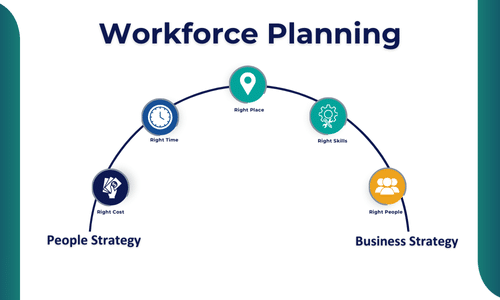
Workforce planning is a strategic process that ensures an organization has the right people, with the right skills, in the right roles, at the right time.
It involves analyzing current workforce capabilities, forecasting future talent needs, identifying gaps, and developing strategies to recruit, retain, reskill, or redeploy talent to meet business objectives.
Key components of workforce planning may include:
- Talent supply and demand analysis
- Skills gap assessments
- Scenario planning
- Strategic hiring or redeployment plans
- Workforce analytics
Succession planning is the proactive process of identifying and developing internal talent to fill key leadership and critical roles in the future.
It ensures continuity and minimizes disruptions when people leave the organization due to retirement, promotion, or unexpected departures.
Key components of succession planning may include:
- Identifying high-potential employees
- Leadership development and coaching
- Readiness assessments
- Career pathing and internal mobility strategies
- Emergency and long-term succession plans

Why do they matter?
Together, these strategies help organizations stay resilient, competitive, and future-ready.
Workforce planning is the bridge between your business strategy and your people strategy. Without it, organizations end up reacting to talent needs instead of anticipating them.
Workforce planning:
- Aligns Talent with Business Goals: Ensures the right skills are in the right roles at the right time to drive growth, innovation, and efficiency.
- Anticipates Change: Prepares for workforce changes—like retirements, resignations, and market shifts—while managing Boomer exits and the evolving needs of younger generations.
- Closes Skills Gaps Before They Become Crises: Identifies emerging skill needs early and enables reskilling and upskilling to keep pace with technology, regulations, and customer demands.
- Improves Recruitment & Retention: Reduces turnover by mapping clear career paths and development opportunities, strengthening your brand as an employer with a plan for the future.
- Supports Diversity, Equity, Inclusion & Belonging (DEIB): Ensures diverse representation at all levels and reduces bias through transparent advancement pipelines.
- Builds Resilience: Maintains business continuity by quickly filling critical roles and boosting agility to adapt to economic, technological, or competitive shifts.
In short: Without workforce planning, you’re guessing. With it, you’re preparing.
It’s a core element of risk management, growth strategy, and long-term organizational health.
Succession planning is the link between your leadership pipeline and your business continuity. Without it, organizations scramble to fill key roles instead of preparing talent in advance.
Succession planning:
- Ensures Leadership Continuity: Provides smooth transitions to keep the organization stable during planned or unexpected changes.
- Protects Institutional Knowledge: Safeguards critical information and relationships when key employees leave.
- Develops Future Leaders: Identifies and prepares high-potential talent to step into key roles.
- Reduces Risk & Disruption: Minimizes downtime and uncertainty from leadership vacancies.
- Supports DEIB Goals: Builds diverse, equitable, and inclusive leadership pipelines.
- Boosts Engagement & Retention: Increases employee commitment by offering clear career advancement paths.
In short: The cost of neglecting succession planning (vacancies, loss of institutional knowledge, poor transitions) can be very disruptive. With it, you ensure continuity.
It’s a critical part of risk management, talent development, and sustaining organizational strength.
Workforce planning and succession planning complement each other. Workforce planning identifies future needs. Succession planning ensures there are people to fill them. Both are things you have to be thinking about ahead of time or you’ll lose time, money and good people.
Common Challenges in Workforce & Succession Planning
- Waiting too long to start planning
- Focusing only on titles, not capabilities
- Lack of diversity and inclusion in leadership pipelines
- Planning without action or accountability
- Creating rushed, incomplete, or impractical plans due to lack of expertise, leading to wasted time, money, and frustration
How Exude Human Capital Supports Your Workforce & Succession Planning
At Exude Human Capital, we know there’s no one-size-fits-all solution. That’s why we take the time to understand what’s working for your organization, what you’ve already tried, and what outcomes you want to achieve. Together, we develop a customized approach tailored specifically to your needs.
Bringing in an external partner with deep expertise and capacity not only lightens the load for your internal team but also ensures a collaborative process that results in a well-crafted plan designed for lasting success.
Here are some of the ways we can help you get started:
Organizational Assessments:
We start by thoroughly evaluating your current people, processes, and organizational structure to uncover gaps and opportunities. Our comprehensive assessments provide the foundation for strategic planning and change initiatives.
Talent Strategy & Design:
Our experts collaborate with you to develop tailored workforce and succession plans that align tightly with your business goals. We focus on building sustainable talent pipelines that anticipate future needs and support growth.
Leadership Development & Coaching:
Preparing the next generation of leaders is critical. We offer targeted development training workshops and individual or small group coaching to build capabilities, confidence, and readiness for key roles.
Compensation Studies:
We conduct in-depth analyses of your current pay structures and market positioning to design competitive compensation programs that attract, motivate, and retain your top talent while supporting your business goals.
Performance Management:
We help you develop and refine performance management systems that foster accountability, continuous feedback, and employee growth—creating a culture of high performance and engagement.
DEIB Strategy Integration:
Inclusion and equity are core to resilient succession pipelines. We help embed diversity, equity, inclusion, and belonging principles into your talent and leadership strategies to create fair, transparent advancement paths.
HRIS & People Analytics Consulting:
Leverage the power of data with our HRIS and analytics consulting. We help you select, implement, and optimize technology solutions that provide actionable insights—empowering smarter workforce decisions.
Start Now, Not Later
Workforce and succession planning aren’t just “nice to haves”—they’re essential business imperatives and key competitive differentiators. Younger generations are demanding more of a roadmap to where their careers could lead.
A recent Robert Walters survey found that 91% of Millennials rank career progression as a top priority when considering new roles, while 79% of Gen Z would actively look for a new job if their current employer doesn’t offer upskilling opportunities. These younger professionals aren’t just searching for jobs—they’re seeking meaningful journeys. They want proactive, transparent career paths and continuous learning—often through modern, flexible methods. They expect to know not only where they can go, but how to get there.
This requires integrating clear career frameworks into workforce planning. Traditional succession pipelines must evolve to include hands-on learning, mentoring, and regular check-ins—elements that resonate deeply with both Millennials and Gen Z.
That’s why compensation structures, performance development, career progression, training, and coaching aren’t optional—they’re make-or-break investments for organizations committed to attracting and retaining top talent.
At Exude Human Capital, we can help you assess where your organization is and how we can help you build a resilient, future-ready workforce.