

As summer winds down, routines start shifting. Calendars fill up, priorities change, and teams transition from the flexibility of summer back into a faster pace.
For leaders, this time of year often brings a familiar challenge: keeping everyone moving in the same direction while navigating changing priorities, competing demands, and new opportunities.
The workplace isn’t so different from a busy highway. There are lane changes, unexpected detours, traffic jams, and moments when everyone seems to be moving at a different speed. The most effective leaders aren’t the ones who can eliminate every obstacle. They’re the ones who help their teams navigate the road ahead with confidence.
Here are four leadership lessons worth remembering as your team gears up for what’s next.
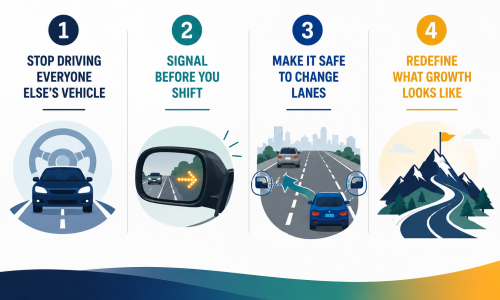
1. Stop Driving Everyone Else’s Vehicle
Many leaders fall into the trap of believing they need to have all the answers.
When an employee struggles, they step in and solve the problem. When conflict arises, they take ownership of fixing it. When priorities shift, they absorb the pressure themselves.
While that may feel helpful in the moment, it creates dependency instead of development.
Strong leaders don’t carry their teams—they coach them.
Instead of asking, “How do I solve this?” try asking:
- What support does this person need?
- What’s getting in their way?
- What resources can I provide?
- What ownership are they willing to take?
Coaching helps employees build confidence, solve problems independently, and grow into stronger contributors. Over time, it also allows leaders to focus on strategy instead of constantly putting out fires.
As leaders, our job isn’t to drive everyone’s vehicle. It’s to make sure they have the map, the resources, and the confidence to navigate the journey themselves.
2. Signal Before You Shift
Think about the last time your organization experienced change.
Was the change itself the biggest challenge…or was it the surprise?
One of the biggest causes of workplace frustration isn’t change. It’s unclear expectations, inconsistent communication, or decisions that seem to appear without context.
Whether you’re introducing a new initiative, restructuring responsibilities, or shifting priorities, communication shouldn’t begin after the decision has been made.
Great leaders:
- Communicate early.
- Explain the “why” behind decisions.
- Repeat key messages consistently.
- Acknowledge uncertainty when it exists.
- Create space for questions and feedback.
People don’t expect leaders to have every answer. They do expect transparency, consistency, and direction. When employees understand where the organization is headed and why, they’re far more likely to embrace the journey.

3. Make It Safe to Change Lanes
Growth requires people to stretch beyond what’s comfortable.
That might mean sharing a new idea, taking on additional responsibility, learning a new skill, or admitting when something isn’t working.
But people rarely do those things if they fear they’ll be criticized, ignored, or punished for trying.
Psychological safety isn’t about lowering expectations. It’s about creating an environment where employees feel comfortable asking questions, learning from mistakes, and contributing new ideas.
Leaders help build that environment through consistent communication, fairness, accountability, and trust.
When employees feel psychologically safe, they’re more likely to collaborate, innovate, and adapt when change inevitably comes.
4. Redefine What Growth Looks Like
Too often, organizations equate growth with promotions.
But some of the most meaningful leadership growth happens long before someone receives a new title.
Growth might look like:
- Learning to delegate instead of doing everything yourself.
- Becoming a better listener.
- Developing emotional intelligence.
- Setting healthier boundaries.
- Moving from reactive problem-solving to strategic thinking.
- Recovering from burnout and leading more sustainably.
Helping employees grow doesn’t always mean moving them up. Sometimes it means helping them become stronger, healthier, and more effective in the role they’re already in.
As leaders, we should celebrate those milestones just as much as promotions because they’re often what prepare people for the opportunities ahead.
Leadership Is About Helping Others Navigate the Journey
No leader can prevent every detour, eliminate every obstacle, or drive every vehicle.
What they can do is provide direction, communicate clearly, create trust, and develop people who are equipped to navigate challenges on their own.
As the pace of work picks up this fall, take a moment to reflect:
- Are your leaders coaching or carrying?
- Are you communicating before change happens?
- Does your team feel safe enough to ask questions and try new approaches?
- Are you investing in leadership growth beyond promotions?
Strong teams don’t happen by accident. They’re built by leaders who intentionally create the conditions for people to succeed.
At Exude Human Capital, we partner with organizations to develop confident, capable leaders through practical leadership training, coaching, and facilitated retreats. Whether you’re preparing managers for new challenges, strengthening communication across teams, or helping leaders navigate change, we focus on building skills that create lasting impact, because leadership isn’t about driving for your team. It’s about helping your team reach the destination together.
Interested in learning more about this topic? Join us for our upcoming webinar, where we’ll explore practical strategies for strengthening accountability, navigating change, building cross-functional collaboration, and aligning individual and team efforts with organizational goals.
You’ll walk away with actionable ideas you can put to work with your team right away.